By Cara Lee
Almost a decade ago, as a journalism student with the University of Bedfordshire, I heard the term “relaxed performance” for the first time. It shows how new the term was that not a single person in my class had heard of the term – even as an autistic theatre fan who always liked to keep my finger on the pulse, I didn’t even link it to disability at first. We all assumed it was some kind of dress rehearsal, only to be very moved to see a whole audience of people who would have been previously shut out, fully enjoying a version of that year’s pantomime at Milton Keynes Theatre, with various accommodations. This included the house lights being turned up, involuntary noise being allowed, audience interaction being limited (especially important in a pantomime) and loud bangs and flashes removed.
Every person who enjoyed that panto and who has enjoyed every relaxed Performance since, from The Lion King to the Guy Who Didn’t Like Musicals, now has access to an entire cultural space that had previously shut them out.
In my 9 years as a theatre blogger since then and as someone who previously had to face the dread of sensory overload myself, I’ve seen many improvements for neurodivergent theatregoers in particular first hand. Relaxed performances have become commonplace, moving from an unknown concept at a local panto to something provided by a vast number of West End and touring productions, in all genres.
Although content warnings obviously exist outside of theatres, they’re also now
easily accessible and are far more detailed pre-show, which makes shows far easier to navigate. As a personal example, I never would have dreamed 10 years ago that I would be able to look up the exact sensory triggers of a high intensity show like Stranger Things: The First Shadow. This meant that, rather than having to dread the show a bit or even avoiding it altogether (even as a huge Stranger Things fan), I was able to walk into the Phoenix Theatre even knowing rough times in the show that sensory triggers could come up and what the lead ins were.
Gamiel Yafai, CEO of Diversity Consultancy Diversity Marketplace, spoke to me
about disability access in theatre. His words, which drew on his extensive experience working to make the world more inclusive, highlighted how vital it is that everyone accesses theatre.
More specifically, he said: “Throughout my two decades working in diversity, equity and inclusion, I have seen time and again how cultural spaces like theatres hold the extraordinary power to reflect the full breadth of humanity and yet that power can sometimes be hollow if whole communities remain excluded before the curtain even rises.
In my experience, accessibility is too often treated as a compliance exercise rather than what it truly is: the very foundation upon which genuine cultural participation must be built.
When a deaf visitor, a wheelchair user, or someone from a community that has never felt welcomed in these spaces walks into a theatre and finds themselves seen in the programme, on the stage, and embedded in the institution’s values inclusion shifts from being a strategic objective to a lived, human experience.
The arts have always had the courage to challenge the status quo and drive social change; it is time our cultural institutions matched that courage by ensuring that every seat in the house is not just physically available, but truly and unconditionally accessible to all.”
As of 2026 the accessibility of theatre overall still isn’t perfect. There are still vast improvements needed for the roughly 24% of the UK population who identify as disabled. For example, according to disability charity Actcessible, as of 2021 only 30% of UK theatres provided access to services such as BSL interpretation and audio description. And according to a report from Arts Council England, as of 2024 only 6% of arts staff came from disabled backgrounds. From the audiences of these theatres to the workforce, there’s a clear gap. As a community, whichever side a person wants to access, it’s vital that these spaces are opened up in the same fantastic way that they have been so far for attendees who are neurodiverse and have sensory issues.
These are all distinct and, in some places, complex issues to tackle. There are
accommodations that should be implemented and there are wider systemic barriers that need to be addressed, which are just as important but may take longer.
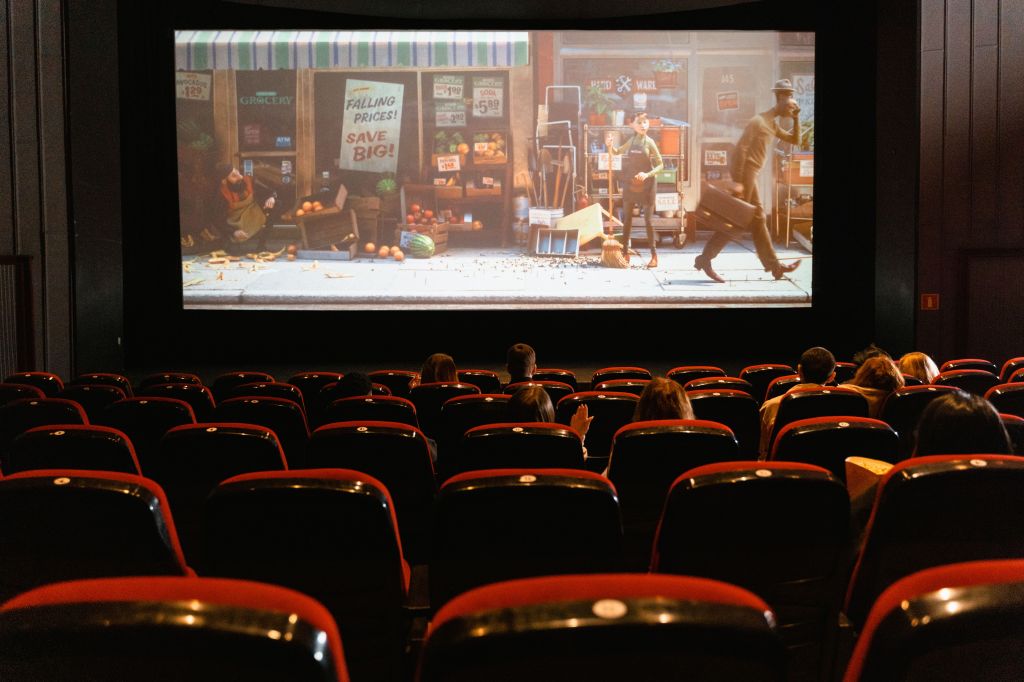
Let’s go back to those audience members in 2017, who never thought they’d be able to enjoy theatre in a way so many others take for granted. The progress we’ve made since then should absolutely be celebrated. In addition, there are still millions of people who could be at the start of that same journey, just waiting for the arts to open up to them.
Imagine what these cultural spaces could look like in another 9 years if theatres
continued to improve their access and widened their scope?
About the Author:
Cara Lee is a UK-based theatre writer who regularly posts theatre news and reviews on her blog, In the Lights (Instagram: @inthelightsblog).
Photo by ExploreWithTunde via Wikimedia Commons, licensed under CC BY-SA 4.0.
 RICO MAGAZINE
Leave a comment