By Anna Eddolls
Watching Fleabag at twenty-two years old made me feel anxious in a new way. Here was a character who was cool, funny and likeable, but also deeply sad and empty. She narrates her way through episodes with charm, throwing winks to the audience and sly smiles when she’s been caught out. We know she’s masking her pain, but what does that matter? Fleabag is hot, she’s charismatic, she owns her own (admittedly, failing) business. She’s a girlboss, right?
Flip that notion on its head to reveal a different kind of sad girl in Britain. Marianne from Normal People also gave me that queasy feeling. Hauntingly beautiful, incredibly clever and consistently abused by everyone around her. Marianne’s defence mechanism isn’t humour like Fleabag’s though, it’s sarcasm. She bats away criticism with her quick wit, often not even bothering to grace her naysayer with so much as a look. Fleabag’s pain is comic and London-coded; Marianne’s is literary and Irish-Catholic; but both are middle-class and articulate. And again, it’s fine. She’s irresistible to Paul Mescal’s Connell. She goes to Trinity, where students orbit her like flies. What’s the real issue?
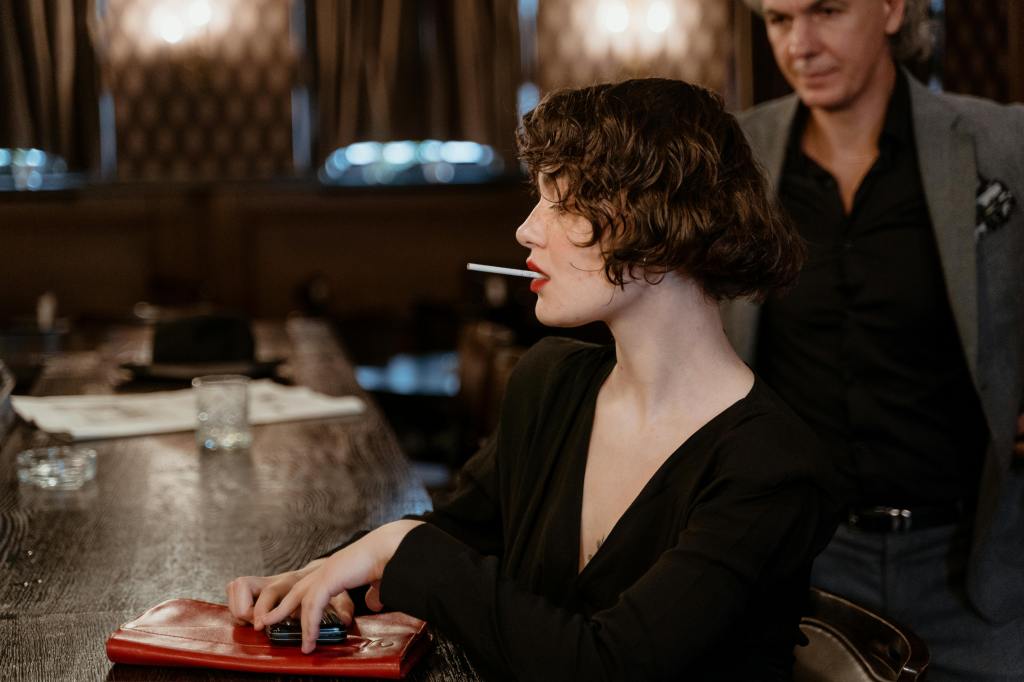
There was a relief in this portrayal, no doubt. I recommended Normal People to everyone when going through a breakup, and Fleabag to anyone who wanted to see what I thought of as a real woman on screen, namely someone with permission to be unlikeable. A new wave of sad girls was being recognised and mapped onto the media, and that should be celebrated.
The problem that came to me halfway through watching and reading these works, was the translation into real life. Being articulately sad had become its own kind of currency, a new trend to hop onto and capitalise on. The aesthetic of this kind of misery, or brand of disassociation, was creeping towards a commodity.
But many of the women around me who were genuinely unwell didn’t look anything like Marianne. They didn’t laugh in the face of adversity or get off with Hot Priests like Fleabag. These girls laid in bed for eighteen hours, glued to their phones, feeling the layer of plaque build up on their teeth from days spent in their room. What does it do to these women, to see these reflections of depression in the media, but packaged up in the body and mannerisms of Daisy Edgar-Jones?
The paradox
This is the most mental-health-literate generation of British women in history, and yet the numbers are getting worse. The breadth of information we can access is unprecedented, creating high levels of cultural literacy and even higher levels of disclosure. Women online share painfully intimate details of their lives whilst making their morning coffee. We can witness breakdowns over marriages and tears over careers ending in immediate succession, one scroll after another.
This is the shift from shame to articulation. Women under forty today can name their feelings in ways their mothers couldn’t. And the sad girl canon is part of this. We have the language, the therapy memes, the celebrity disclosures, the shows that taught us what our interior lives sound like. So what went wrong?
In 2023 England, one in five 17-to-19-year-old women had an eating disorder – four times the rate in young men. Adult ADHD diagnoses among women aged 20-24 have more than doubled since the pandemic, a surge that looks less like a trend and more like a generation of women finally being recognised after decades of being missed. And in the latest MBRRACE-UK data, maternal suicide remains the leading cause of death for women between six weeks and a year after giving birth, with psychiatric causes accounting for a third of all maternal deaths.
Most pieces written this Mental Health Awareness week will stop at the obvious diagnosis: awareness is up, services are down, fund the NHS! All of that is true, but none of it is enough. The harder question is why a decade of unprecedented cultural visibility has coincided with this clinical picture, and the answer, uncomfortably, has something to do with the visibility itself.
The version of female suffering that has been made visible is a specific one. It is articulate. It is photogenic. It is, more often than not, middle-class, white, and culturally fluent. It speaks in well-formed sentences about its own pain. It is the kind of suffering that wins awards, sells novels, and gets commissioned for a second season. And over a decade of seeing it, both women and the clinicians who assess them have learned to recognise it as the legitimate shape of female mental illness.
Which means women who present that way get seen. The articulate graduate describing low mood at her GP appointment is taken seriously. The new mother who can name her intrusive thoughts in a therapy session is referred onward. But women whose distress is louder, messier, less narratively coherent: who turn up angry instead of sad, chaotic instead of articulate, inconvenient instead of moving, get filtered out. They become “difficult.” They get the personality disorder label rather than the depression one. They wait longer. They are believed less. They die at higher rates.
None of this is to say the rising numbers are bad in themselves. Women being diagnosed with ADHD in their thirties, with eating disorders in their teens, with postnatal depression rather than ‘baby blues’ – this is recognition catching up with reality, and it is overwhelmingly a good thing. The maternal mortality data, though, isn’t a diagnostic artefact. Women aren’t dying more because we’re better at counting them. They’re dying more because the system isn’t reaching them. And the women it isn’t reaching are the women who don’t look like the ones on screen.
Visibility has not translated into care. It could, instead, be actively obscuring it.
The Marianne parallel
Connell finally turns up at Marianne’s door. The camera lingers on his body pressed against the glass, peering in urgently as he waits for an answer. He shoves her brother against the wall, and threatens to kill him if this kind of violence occurs again.
But when I was verbally berated by an ex-boyfriend after wearing long socks with shorts (shocker) to a party, there was no one there to whisk me away as the door to his accommodation slammed shut. I walked the forty minute journey home with tears stinging my eyes, people noticing the crazy lady but quickly turning away, not wanting to intrude. I don’t blame them really.
Most women’s experience of being unchosen isn’t being almost-loved by a conflicted man. It’s being ghosted by someone who wasn’t conflicted, just uninterested. It’s watching a friend get chosen and trying to perform happiness for her. It’s the specific modern humiliation of pain that has no audience, no narrative arc, no Connell who reappears in chapter twelve. There is no priest. There is no second season.
We learn to perform the canon-shaped version of heartbreak. Articulate, dignified, contained. It is the version the culture validates, the version friends know how to respond to, the version a GP can recognise as low mood and refer onward. The ones whose pain comes out louder, messier, more pathetic-looking, angry instead of wistful, obsessive instead of melancholic, repetitive instead of resolving, are filtered out. Out of the group chat. Out of the dinner invitations. Out of the GP appointment that might have caught something. The aperture stays narrow, and the women on the other side of it stay invisible.
So does this media portrayal of beautiful suffering and Prince Charming-esque saving mean I was waiting for that reality to materialise? I’m not sure. But the friend in the bed, the dried tears, the 2am exchange of humiliating stories, that is itself a kind of privilege. The women the template excludes most completely are the ones who don’t have those friends either. No one is waiting up. Just the GP appointment that didn’t catch it, the waiting list, and a long walk home that doesn’t end.

Sources:
NHS England Digital, Mental Health of Children and Young People in England 2023, Wave 4 follow up – Part 5: Eating problems and disorders. https://digital.nhs.uk/data-and-information/publications/statistical/mental-health-of-children-and-young-people-in-england/2023-wave-4-follow-up/part-5-eating-problems-and-disorders
NHS England, Plain English Summary of the ADHD Taskforce Report, December 2025.URL: https://www.england.nhs.uk/long-read/plain-english-summary-of-the-adhd-taskforce-report/
MBRRACE-UK, Maternal Mortality 2022-2024 Data Brief, National Perinatal Epidemiology Unit, University of Oxford. Published January 2026. https://www.npeu.ox.ac.uk/mbrrace-uk/data-brief/maternal-mortality-2022-2024
Photo by ExploreWithTunde via Wikimedia Commons, licensed under CC BY-SA 4.0.
Photo by ExploreWithTunde via Wikimedia Commons, licensed under CC BY-SA 4.0.
About the Author:
I’m Anna, a writer in my twenties based in London. I write about the things I’m probably oversharing, the messy bits of being a young woman, the gap between how life is supposed to feel and how it actually does, and the cultural stories we measure ourselves against. You can find more of my personal writing on Substack at https://substack.com/@breadolls/p-182198351, and my work on healthcare tech over on LinkedIn:
www.linkedin.com/in/anna-eddolls-438065227
 RICO MAGAZINE
Leave a comment